












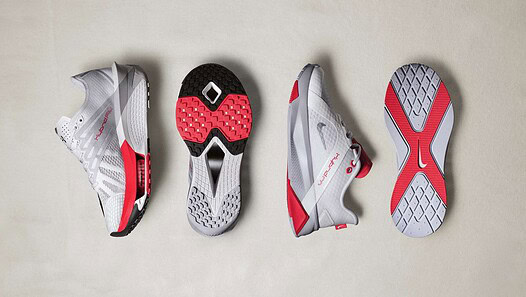
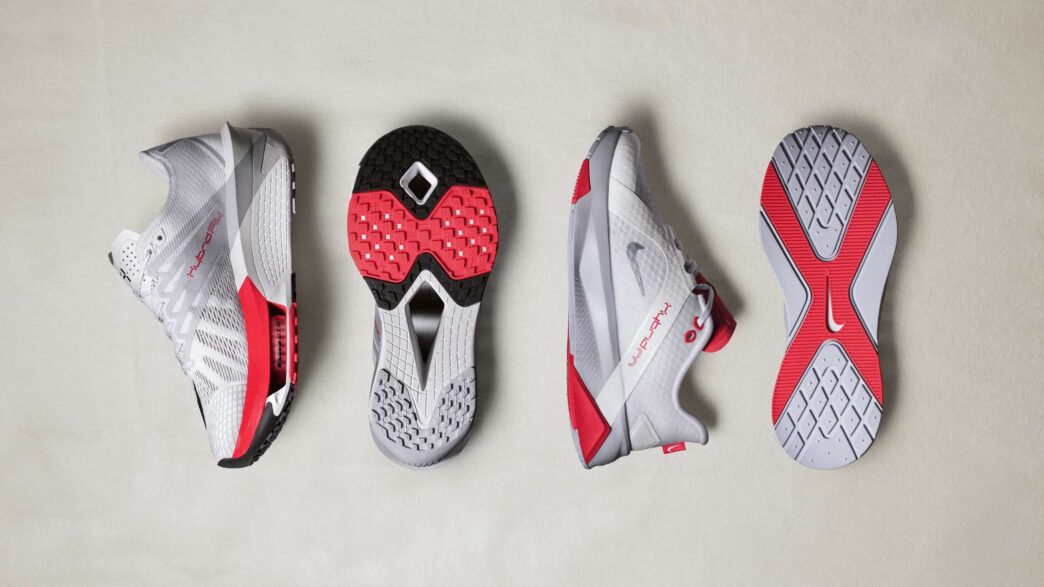
The new Nike Hybrid system introduces the Hybrid RN for everyday hybrid training and the carbon-plated Hybrid Fly for competition.
As hybrid racing continues to grow, Nike is making a more serious move into the space with a new footwear system designed specifically for athletes who split their time between running and strength work.
Called Nike Hybrid, the new line consists of two very different shoes: the Nike Hybrid RN, designed primarily for everyday hybrid training, and the Nike Hybrid Fly, a more aggressive carbon-plated model built specifically for race day.
It addresses a familiar problem for hybrid athletes. A conventional running shoe may provide the cushioning and responsiveness needed for repeated running intervals, but can feel unstable when it comes time for sled pushes, lunges and loaded movements. Traditional training shoes offer the opposite: stability and grip in the gym, but often at the expense of running comfort and efficiency.
Rather than trying to make one shoe do everything, Nike has created two.
Nike Hybrid RN: The One You Train In
The first shoe athletes will actually be able to get their hands on is the Nike Hybrid RN, which launches globally on 8 October.
Nike describes the RN as a “runnable trainer”, and that distinction is important. This isn’t positioned as Nike’s fastest option for race day; it is the shoe designed to handle the repeated running, lifting and functional movements that make up everyday hybrid training.
Underfoot, Nike pairs ReactX foam with a forefoot Air Zoom unit, giving the RN more cushioning and responsiveness than you would typically expect from a conventional gym shoe.
But stability remains a priority. A wider outsole creates a more planted platform for strength work, while X-shaped overlays across the upper are designed to hold the foot securely during changes in direction and transitions between movements.
The outsole also uses two different types of rubber to provide grip and durability across different surfaces, while an engineered mesh upper provides breathability and support.
The result is essentially Nike’s attempt at a middle ground: a shoe comfortable enough to run in, but stable and grippy enough to handle sleds, lunges, squats and other station work.
For athletes training for events such as HYROX, that could make the RN particularly useful for sessions involving compromised running, where athletes repeatedly switch between running intervals and strength stations.
Nike Hybrid Fly: Save This One for Race Day
If the Hybrid RN is the workhorse, the Hybrid Fly is where Nike has brought out its faster technology.
Launching globally in April 2027, the Hybrid Fly is specifically engineered for hybrid competition and borrows heavily from Nike’s performance running footwear.
Instead of ReactX, the Fly uses ZoomX foam, combined with a full-length carbon-fibre Flyplate and two forefoot Air Zoom units.
The objective is clear: preserve as much running speed and efficiency as possible without creating a shoe that becomes unstable once an athlete reaches a workout station.
To achieve that, Nike combines the responsive cushioning system with a wider platform for greater stability. The outsole incorporates four traction zones using sticky rubber, along with sidewall wraps intended to provide additional grip during movements such as sled pushes and pulls.
There are also race-specific lockdown laces and a lightweight engineered mesh upper reinforced with zoned haptic lines for additional structure.
Nike developed the system with input from both everyday athletes and elite hybrid competitors, including world champions Dylan Scott and Lauren Weeks.
Why Two Shoes?
Perhaps the more interesting part of Nike Hybrid isn’t any individual technology, but Nike’s decision to treat hybrid training and hybrid racing as two separate footwear problems.
The RN isn’t simply a cheaper version of the Fly.
One is designed to absorb the volume and variety of everyday training; the other prioritises speed and performance when the clock matters.
It is an approach runners will already recognise. You might accumulate most of your weekly mileage in a daily trainer before switching to a carbon-plated supershoe for race day.
Nike is effectively bringing that same philosophy to hybrid athletes.
And with hybrid racing requiring athletes to repeatedly transition between running and movements such as sled pushes and pulls, lunges, rowing and SkiErg work, footwear arguably has a much broader job description than it does in a conventional road race.
The question now is whether hybrid athletes will adopt the same two-shoe rotation runners have become accustomed to.
Train in the Hybrid RN. Race in the Hybrid Fly.
The Nike Hybrid RN launches globally on 8 October 2026 through Nike and selected retailers. In Singapore, it is listed at S$209.
The Nike Hybrid Fly will follow with a global launch in April 2027.