








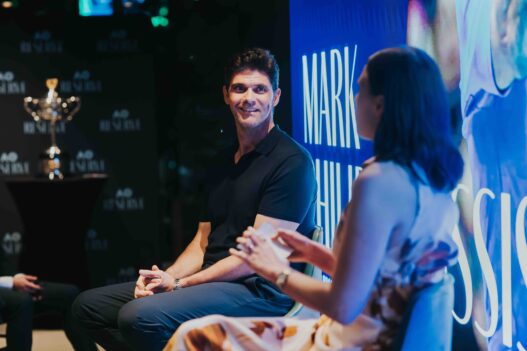
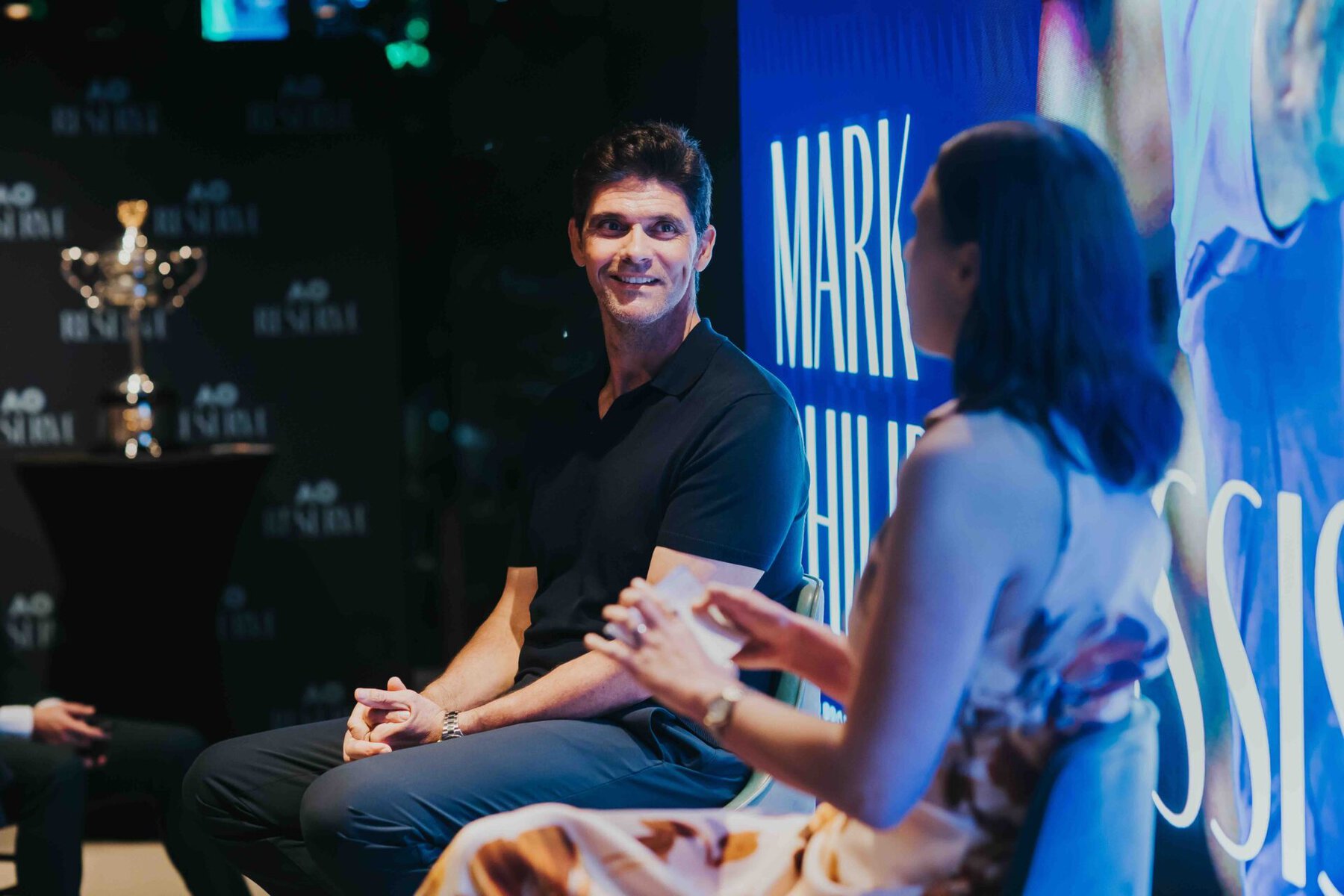
Two-time Grand Slam finalist Mark Philippoussis has competed against some of the greatest names tennis has ever produced – from Pete Sampras and Andre Agassi to Roger Federer and Rafael Nadal.
But for the former World No. 8, what separates the very best from everyone else is not simply talent. It is the ability to put in the work, build an unshakeable belief, and somehow find a way to win even when your best tennis is nowhere to be found.
Speaking at a closed door event at 67 on Scotts in Singapore, Philippoussis reflected on the highs and lows of his career, how tennis has evolved, and the mentality required to succeed at the highest level.
“If I was coaching someone, I’d rather be coaching someone who had a huge heart and had that work ethic,” he said. “Natural ability will take you a certain distance. It’s the hard work.”
Philippoussis pointed to the likes of Rafael Nadal, Roger Federer, Novak Djokovic and the current generation led by Carlos Alcaraz and Jannik Sinner as examples of players who paired extraordinary ability with the willingness to keep working.
That work, he believes, creates something equally important: confidence.
“You can’t lie to yourself,” he said. “You can’t say, ‘I’m ready’ when you’ve got a chance today if you haven’t put in the work.”
It is particularly evident in the biggest moments. Philippoussis believes many players outside the very top of the rankings possess the shots and athleticism to compete with the world’s best. The difference is often what happens when a match reaches its most important points.
“The best players in the world, when they’re not playing their best, [are] finding ways to win even if they’re not playing at 100%,” he said. “They believe here and here that they can still win. I think that’s the difference with the best. They win on days when they’re not playing their best.”
Learning From The Losses
Philippoussis knows both sides of that equation. His career took him to two Grand Slam finals – the 1998 US Open and 2003 Wimbledon – but he never lifted a singles Grand Slam trophy.
Looking back, however, the 49-year-old believes some of his most difficult moments ultimately gave him his most valuable lessons.
He admitted that watching another player celebrate after coming so close to achieving a childhood dream “hurts”, particularly once he understood just how rare those opportunities were.
Yet those setbacks also shaped him.
“The most powerful ones were the things where there were setbacks and being in a situation where you kind of feel like you can’t see the light in the tunnel,” he said.
Over time, those experiences “harden you up”, he added, giving you the knowledge that when another difficult period arrives, “you’re strong enough to get through it because you got through that.”
His proudest memories, however, are not the Grand Slam finals. They are his two Davis Cup victories representing Australia.
Philippoussis described pulling on the green and gold for the first time as a “rite of passage”, having grown up surrounded by the legacy of Australian tennis greats.
And despite a career spent chasing victories, his definition of success today looks very different. “Success for me is… being a husband and a father to two healthy kids,” he said.
“For me, success is being able to share a beautiful experience in life with the people that you love.”