









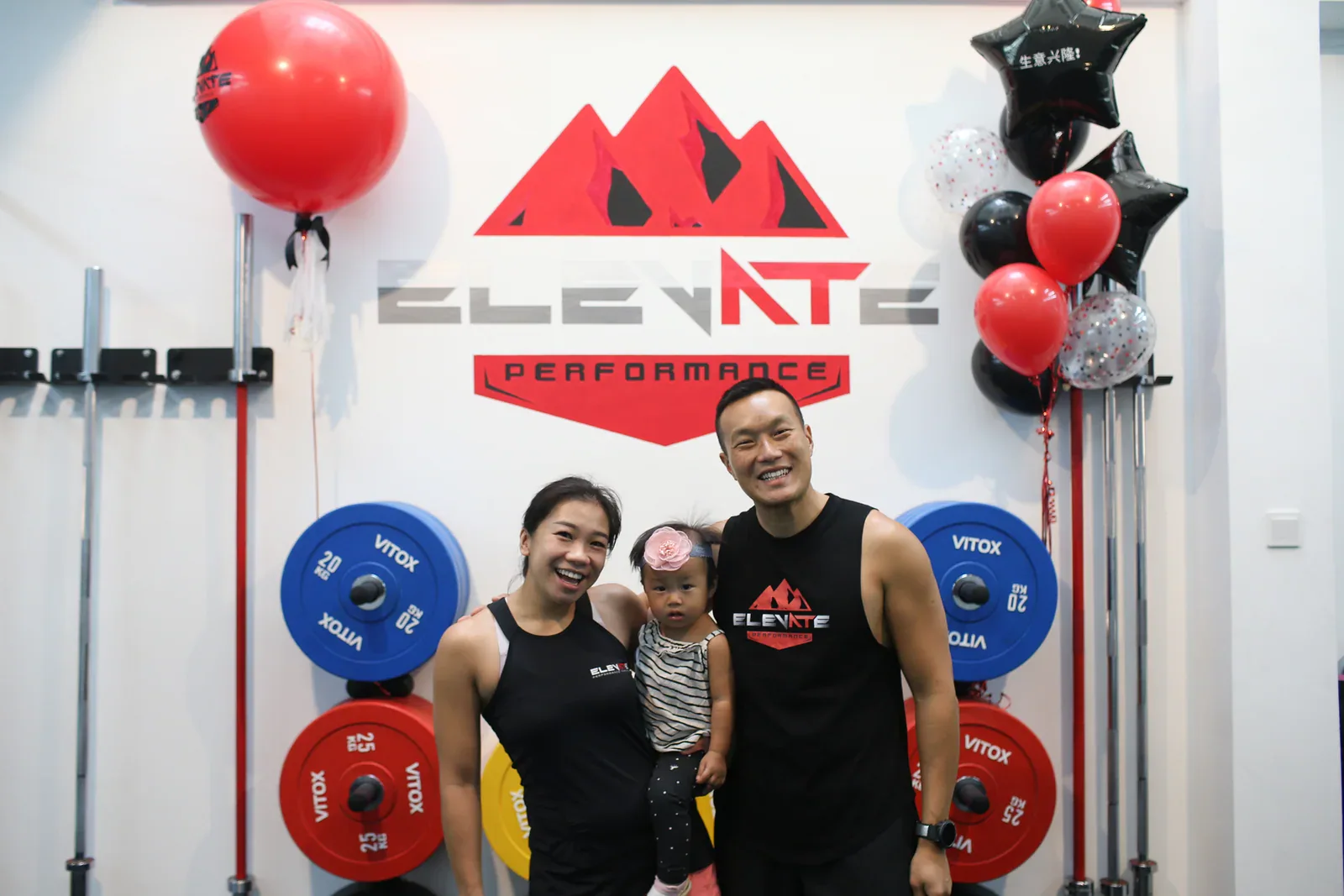
Years after closing Elevate Performance Gym following just one year of operations, Arthur Tong reflects on the financial struggles, emotional toll and hard-earned lessons that changed his perspective on entrepreneurship, leadership and success.
Years after shutting down Elevate Performance Gym, Tong can finally look back on the experience without the same pain he once felt.
What started as a dream shared among former army colleagues became a business venture that lasted just one year, involved an investment pool of approximately S$300,000 and pushed Tong to one of the lowest points of his life.
At the time, he struggled to separate the failure of his business from his own sense of self-worth. “I think at that stage, at that point of time, I couldn’t help but view myself as a failure,” he admitted.
Today, however, the founder of Elevate Performance Coaching sees things differently.
The experience taught him lessons about entrepreneurship, leadership, financial discipline and knowing when to walk away — lessons he believes have made him a better business owner.
In a candid conversation with Baseline, Tong revisits the rise and fall of Elevate Performance Gym, the emotional toll of watching his dream unravel and why the experience has not extinguished his passion for entrepreneurship.
The Dream That Started It All
Before becoming an entrepreneur, Tong spent 13 years in the military. During his time in service, he and his colleagues regularly trained together and often spoke about the possibility of opening their own gym someday.
The idea had been brewing since around 2015, but it was only after Tong left the military and established Elevate Performance Coaching that the opportunity became more realistic.
Through his coaching business, Tong was already helping athletes take up triathlon, offering swimming, cycling and running programmes, overseas training camps and cycling trips.
Opening a gym seemed like a natural extension of those services, allowing athletes to incorporate strength and conditioning into their training while building a community around fitness.
Together with two close friends who were also former army regulars, Tong decided to turn that long-held ambition into reality.
The timing appeared favourable.
As Singapore emerged from the COVID-19 pandemic, commercial spaces were becoming available as businesses closed or downsized. Tong and his partners saw an opportunity to enter the fitness industry at a relatively affordable cost.
They conducted extensive research before committing to the venture, even collaborating with a professor and students from Nanyang Technological University’s business school to better understand consumer preferences, pricing, accessibility and gym usage patterns.
The team eventually secured a space in the Duxton area, near Singapore’s Central Business District.
The anticipated opening of Maxwell MRT station along the Thomson-East Coast Line was another factor that made the location attractive.
To keep their initial investment manageable, they purchased some second-hand equipment and carried out much of the renovation work themselves.
They painted the walls, installed flooring and spent long hours transforming the space into a functional training facility.
Tong described it as a labour of love.
When Elevate Performance Gym finally opened, the atmosphere was celebratory. Classes were packed, neighbouring businesses contributed food and drinks, and the team was optimistic about what lay ahead.
But that excitement would prove short-lived.
Where Things Went Wrong
Despite their careful planning, several developments worked against the business.
One was the delayed opening of Maxwell MRT station, which Tong had factored into the gym’s accessibility and potential customer base.
Another was the shift towards working from home.
With many employees no longer travelling to the office five days a week, the appeal of a gym located near the workplace diminished.
Instead, people increasingly preferred fitness facilities closer to their homes.
“If you were working only two, if not three days of the week at the office, you will most likely subscribe to a gym membership that is closer to home, no longer closer to the office,” Tong explained.
At the same time, operating expenses continued to mount.
Monthly overheads ranged between S$13,000 and S$14,000, covering rental, utilities, cleaning, maintenance, pest control, laundry and coaching-related expenses.
Operating from an older building also came with unexpected responsibilities, including plumbing and air-conditioning maintenance.
To keep expenses down, Tong and his partners coached classes without drawing salaries throughout the gym’s one-year operation.
“Nobody took a salary from it just to keep the dream alive,” he said. Even with those sacrifices, the gym was barely covering its operating costs.
By the sixth month, Tong began to realise that the business was not progressing as expected.
At around the nine-month mark, the partners gathered to discuss whether they should close the gym or inject more money to keep it running. They chose to give it another chance.
Each contributed additional funds, hoping that more time and greater marketing efforts would eventually turn the business around.
But another challenge was approaching.
As Singapore’s economy reopened, the Duxton neighbourhood experienced a resurgence in food and beverage activity.
Tong’s landlord informed the team that another prospective tenant was prepared to pay substantially more for the space.
Although the original lease was for two years, it included a provision for rental renegotiation after the first year.
With the gym already struggling financially, the team could not justify a significant rental increase.
The meeting ultimately confirmed what they had been considering for months. “It was at that meeting we realised on the spot that this was, we’re going to call it a day.”
The Financial Cost of Chasing a Dream
Tong revealed that the team had assembled approximately S$300,000 to launch and sustain Elevate Performance Gym.
Around S$100,000 to S$150,000 was spent on setting up the facility, including renovation and equipment, while the remaining funds were allocated towards operating expenses and reserves.
Much of the investment came from friends who believed in Tong and his partners.
When the business began struggling, the partners contributed additional money in an attempt to buy more time.
Although Tong clarified that they did not lose the entire S$300,000, the team had accepted that much of the investment would not be recovered.
Closing the gym also involved dismantling the facility, selling equipment and reinstating the premises.
Tong reached out to other gym owners to see whether they were interested in purchasing equipment, hoping to recover whatever funds they could. However, not everything was sold.
Much of the equipment was donated to a church that was setting up a gym space for people experiencing homelessness.
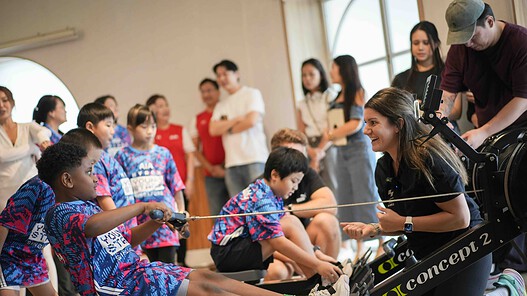
The team also retained equipment for Elevate Performance Inclusive Classes (EPIC), a programme that provided exercise opportunities for individuals with special needs.
The inclusive training sessions continued beyond the closure of the physical gym.
Despite the financial setback, Tong remained committed to the purpose that had driven him into the sporting industry in the first place: helping people through sport.
But the personal cost of the experience went far beyond money.
“I Was Just a Horrible Person”
For Tong, one of the hardest parts of the experience was coming to terms with the fact that something he had poured so much of himself into had not worked out.
The contrast between the excitement of opening the gym and the reality of shutting it down was difficult to process.
He remembered the grand opening, the packed classes, the celebrations and the optimism surrounding the venture.
Within months, that excitement had been replaced by anxiety over finances and the future of the business.
“Man, I was probably one of the lowest point in my life,” he recalled. The stress began affecting not just Tong’s mental well-being, but also his family life.
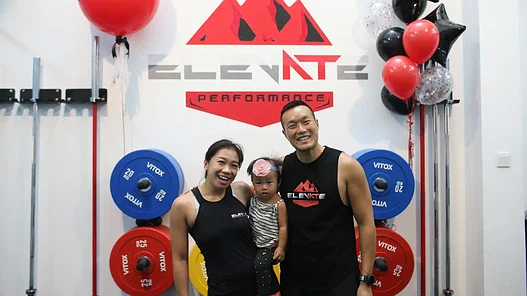
At the time, Tong and his wife Elaine Young already had their daughter, Haley, and had been considering having a second child. However, the financial uncertainty surrounding the gym had consumed him to the point where he could barely think about anything else.
“I was just a horrible person. I think I was the most horrible person to Elaine,” he admitted.
Even during their annual family trip to Canada, his thoughts remained fixated on the business. Instead of enjoying time with his family, he found himself constantly discussing the gym’s problems with relatives and asking for advice.
The business had become an all-consuming preoccupation, affecting his mood, his relationships and his ability to be present for the people who mattered most.
Yet walking away was incredibly difficult because of how much he had invested in the dream.
“You’re going to invest in yourself, you’re going to invest in the team, you’re going to invest in the space, you call it your home, it’s your baby. You can’t allow it to just disappear when things get tough.”
That emotional attachment made the decision to walk away even harder.
When Ego Makes It Hard to Let Go
Looking back, Tong acknowledged that his determination to keep the gym running was not entirely driven by business considerations.
Ego had played a part.
When he left the military, he had walked away from what many would consider an “iron rice bowl” — a secure career with a predictable salary. He wanted to prove to his former colleagues and superiors that he had made the right decision.
“I felt like I needed to prove to my colleagues and my ex-bosses that I’m going to make it out there,” he admitted. That desire to succeed followed him into entrepreneurship.
He had even set himself a target monthly income that was significantly higher than what he had earned in the military.
Although he has since achieved that financial goal, he now recognises how strongly the need to prove himself influenced his decisions.
“That ego definitely probably made me within the team of partners a little bit more wanting to keep going.”
The experience also taught him to be more discerning about whose advice he listened to. Following the closure, some people were quick to tell him that opening the gym had been a bad idea.
But Tong noticed that those who offered the most meaningful support were often fellow entrepreneurs who understood the challenges of running a business.
He recalled sitting on the floor of the soon-to-close gym with Lim Yao Peng from Grityard, discussing the difficulties faced by smaller fitness operators.
It was a moment of solidarity between two business owners who understood what the other was going through.
“Interestingly, it’s the people who have done entrepreneurship, who are entrepreneurs themselves, who came to me with the best support.”
Being a Good Coach Doesn’t Make You a Good Business Owner
One of Tong’s biggest realisations was that excelling in sport or coaching does not automatically translate into being a successful entrepreneur.
“You don’t use the same yardstick to measure how good you are as an athlete versus how good you are as a coach and versus how good you are as a business owner.”
Each role requires a different set of skills. A successful athlete may possess technical expertise but struggle to communicate effectively as a coach.
Similarly, a passionate and capable coach may not necessarily have the financial, operational and commercial knowledge needed to run a gym.
Tong acknowledged that while he had a clear purpose in helping people through sport, running a physical business required him to take on responsibilities far beyond coaching.
From managing finances and maintaining facilities to marketing, business development and working with landlords, there were many areas demanding attention.
“You can’t do it all. You need experts in each field,” he said.
Looking back, Tong acknowledged that he would have made some decisions about the people involved in the business differently, including letting certain people go earlier.
He also recognised the importance of having partners with complementary strengths and being realistic about what the team could manage.
Another lesson was the importance of seeking advice from fellow gym owners before problems arose.
He admitted that he had not tapped into the experience of other operators early enough, despite having people in the industry he could have approached.
“Because you find a lot of solidarity because we are all entrepreneurs and it’s such a lonely journey,” he explained. “But then you realise if you speak to them, you’re not so lonely anymore.”
The Responsibility of Leading Through Difficult Times
For Tong, one of the toughest parts of running a struggling business was maintaining his composure as a leader.
Having spent 13 years in the military, leadership was something he took seriously. Even as the gym’s financial situation deteriorated, he felt responsible for maintaining optimism within the team.
The coaches knew that the business was struggling, and Tong made an effort to involve them in discussions about potential solutions.
But he also understood that his attitude would influence those around him.
He recalled the importance of maintaining “that level of optimism and hope till the very last day”.
For him, leadership meant continuing to show up and deliver the best possible experience to members, even when the future of the business was uncertain.
He also reflected on the importance of setting an example for the team.
“And that is where, again, I’m a student of leadership because it is so important for the leader at the top to be leading by example,” he said.
“To show up at the gym, knowing that the business is not doing well. But yet, when the client walks into the gym, you know that you need to give your 100%.”
It was another lesson he would carry into his subsequent ventures.
The Lessons That Stayed
Despite everything he went through, Tong has not lost his passion for entrepreneurship.
In fact, one of his biggest realisations from the experience was how much he enjoyed being an entrepreneur, even with the challenges that came with it.
He believes that some lessons can only be fully understood through firsthand experience, regardless of how much advice one receives beforehand.
Looking back, he does not necessarily believe he should have closed the gym earlier.
The team had budgeted for a one-year venture, and he believes the experience itself was valuable.
“Maybe not but just that maybe with what I know now, the way we would have handled things would have been very different,” he said when asked whether he would have walked away sooner.
His motivation for being in the sporting industry has also remained unchanged.
Elevate Performance Coaching continues to operate, providing triathlon coaching, swimming and running programmes, overseas training camps and cycling trips.
However, Tong’s approach to running his business has evolved.
Rather than constantly looking for new opportunities or trying to expand into different areas, he now places greater importance on doing the fundamentals well.
“I feel like what’s important for me now is doing the small things right.”
That means providing quality coaching, maintaining meaningful relationships with athletes, delivering well-organised training experiences and ensuring that people understand the purpose behind their programmes.
For Tong, coaching is no longer simply about prescribing training sessions.
“It’s that rapport, it’s that communication with the athletes,” he explained, emphasising the importance of being invested in athletes as human beings rather than simply writing their training plans.
From Failure to a Life Lesson
Years after the closure of Elevate Performance Gym, Tong is able to speak about the experience with a perspective he did not have at the time.
What once felt like a devastating personal failure has become an important chapter in his entrepreneurial journey.
The closure taught him about leadership, financial discipline, choosing the right partners, seeking support and recognising the difference between being passionate about something and knowing how to run it as a business.
It also reinforced why he had entered the sporting industry in the first place.
“I am just passionate about people,” he said. For someone who once felt he had to prove himself to the world, that clarity may be one of the most valuable outcomes of the entire experience.
“I’ve shifted it from a failure to a very good life lesson.”
And while Elevate Performance Gym may no longer exist, the purpose behind it continues through the athletes, communities and experiences Tong is still building today.
Ultimately, his story is a reminder that a failed business does not necessarily make someone a failed entrepreneur. Sometimes, the most valuable lessons come from the ventures that do not work out — and what one chooses to do with those lessons afterwards.