







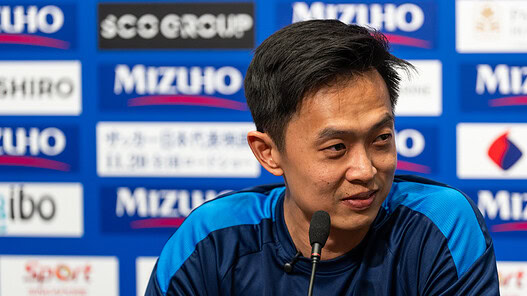

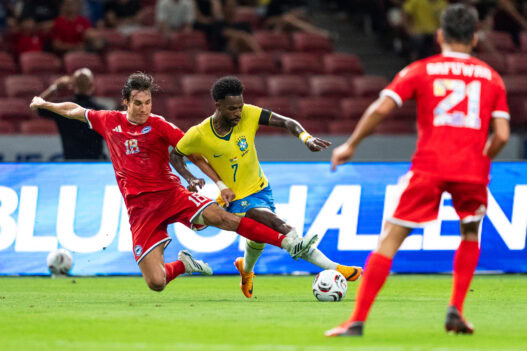
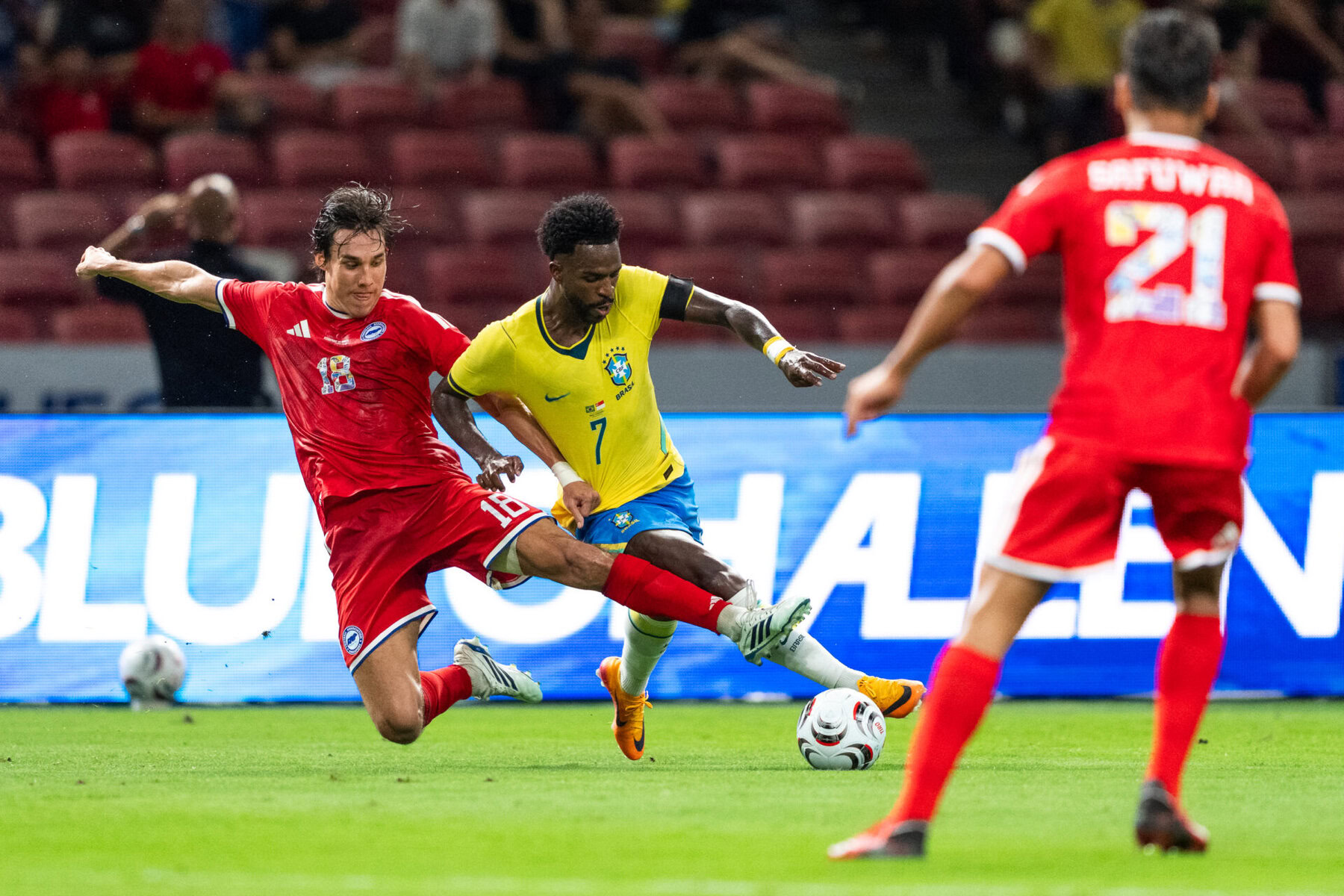
Singapore head coach Gavin Lee has defended his team’s approach against Brazil despite the heavy 7-0 defeat, insisting the Lions must be willing to test themselves against the world’s best rather than sit back and defend.
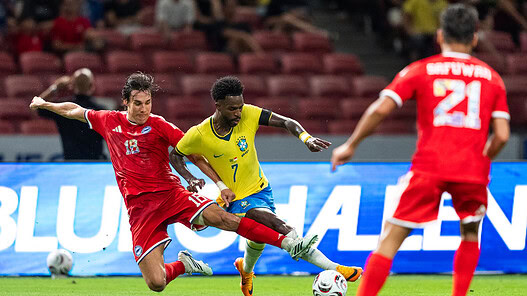
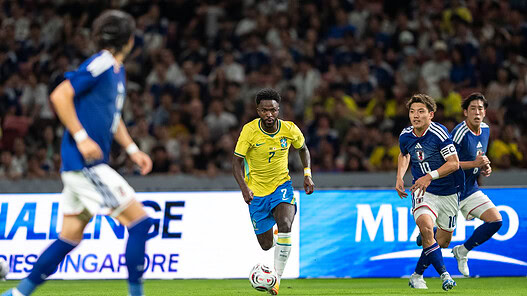
The Lions were comprehensively outclassed by the five-time world champions in the Mizuho Blue Challenge – The Kallang Football Series Singapore at the National Stadium on Tuesday (17 November), with Real Madrid star Vinicius Junior scoring a hat-trick inside the opening 21 minutes.
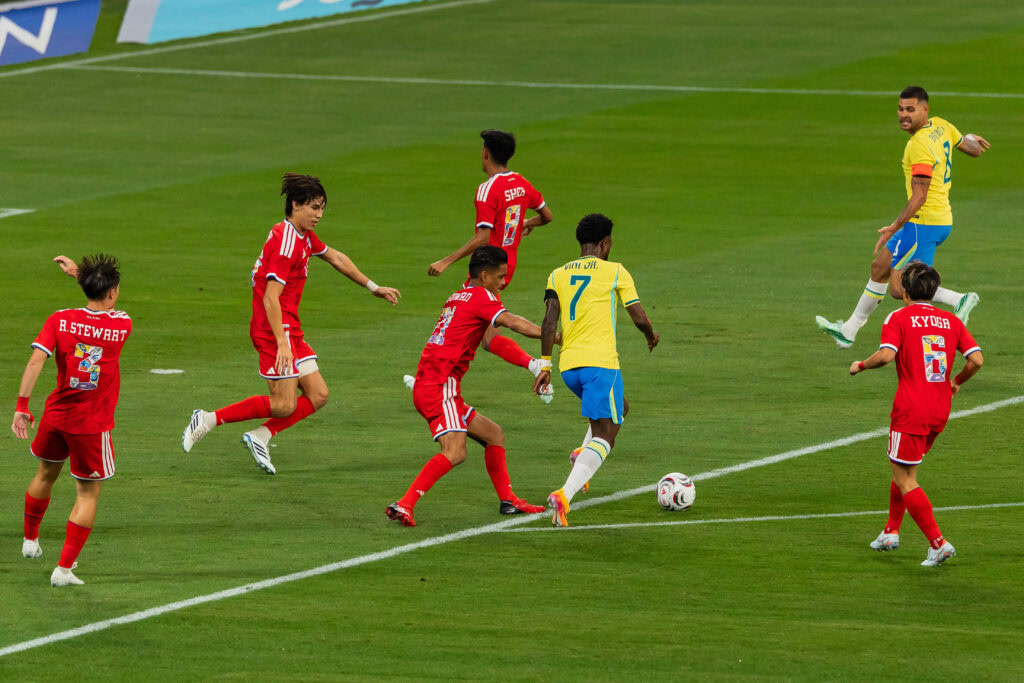
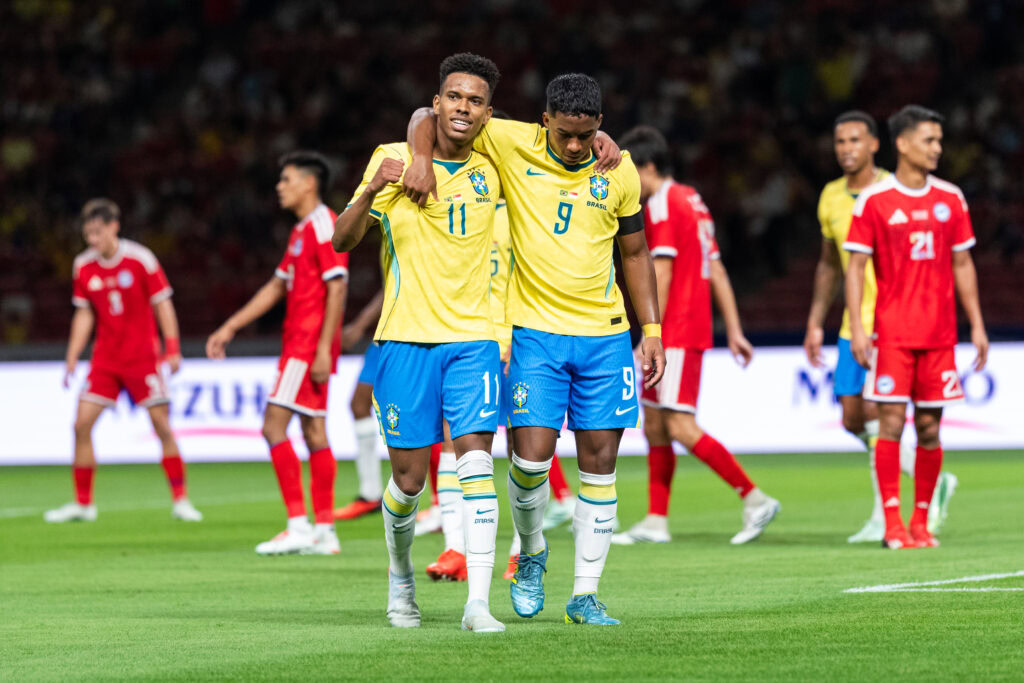
Endrick, Estevao and Rayan also found the net, while Brazil’s seventh came from a Raoul Suhaimi own goal, as Singapore suffered their second defeat of the tournament following a 4-1 loss to Paraguay on Friday.
While the gulf in quality was evident, Singapore resisted the temptation to sit deep throughout the contest, instead attempting to play out from the back and push forward whenever opportunities arose.
The approach left the Lions vulnerable to Brazil’s pace and constant pressing, raising questions over whether Singapore should have adopted a more conservative strategy against such formidable opposition.
However, Lee maintained that his players had been encouraged to remain true to their style of play regardless of the opposition.
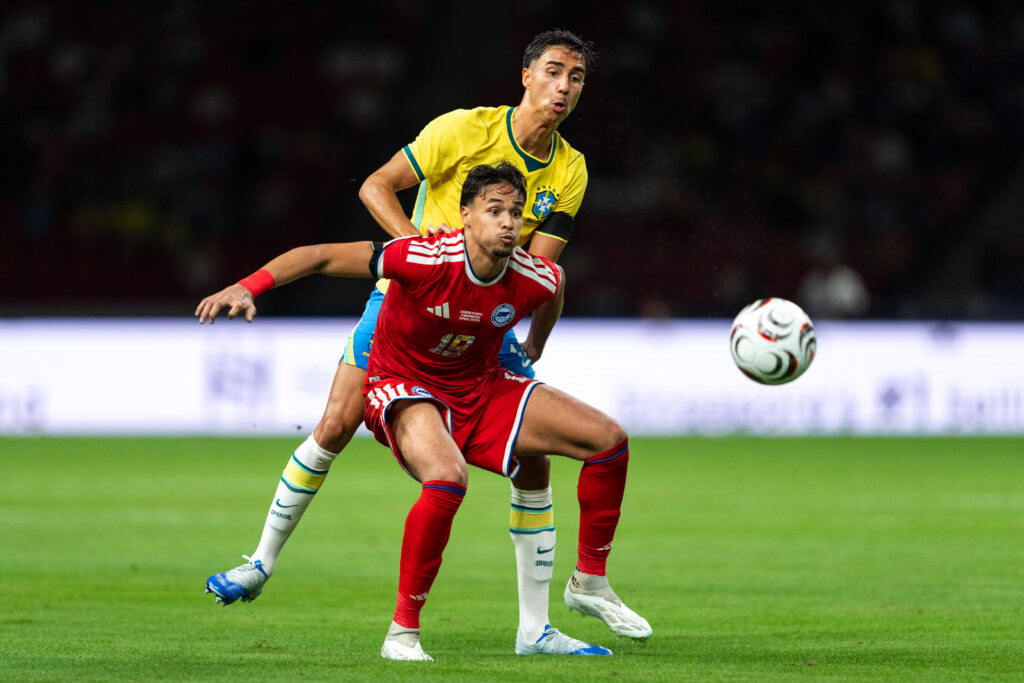
In response to Brazil assistant coach Francesco Mauri’s description of Singapore as brave, Lee said: “I’m glad that’s the word he used to describe us, because that was our main message before leaving the hotel today. It was about being brave enough to be us, and not allowing the context to shape us and define us.”
The 36-year-old explained that defending against Brazil was never simply a choice between sitting deep or maintaining a high defensive line.
“You have two ways to play against Brazil, right? One is to defend as close as possible to your box, and the other is to try to keep them as far away from your goal as possible,” he said.
“So you can hope and wait, or you can try to do something and push them away. But it really depends on the context.”
A harsh lesson in the demands of elite football
Singapore did enjoy brief moments of promise, particularly in the first half, when Ryhan Stewart delivered dangerous crosses into Brazil’s penalty area. Ilhan Fandi came close to scoring from one of those deliveries, while another forced goalkeeper Lucas Perri into action.
However, those opportunities were few and far between, with Brazil repeatedly punishing Singapore’s mistakes and exploiting spaces behind the defence.
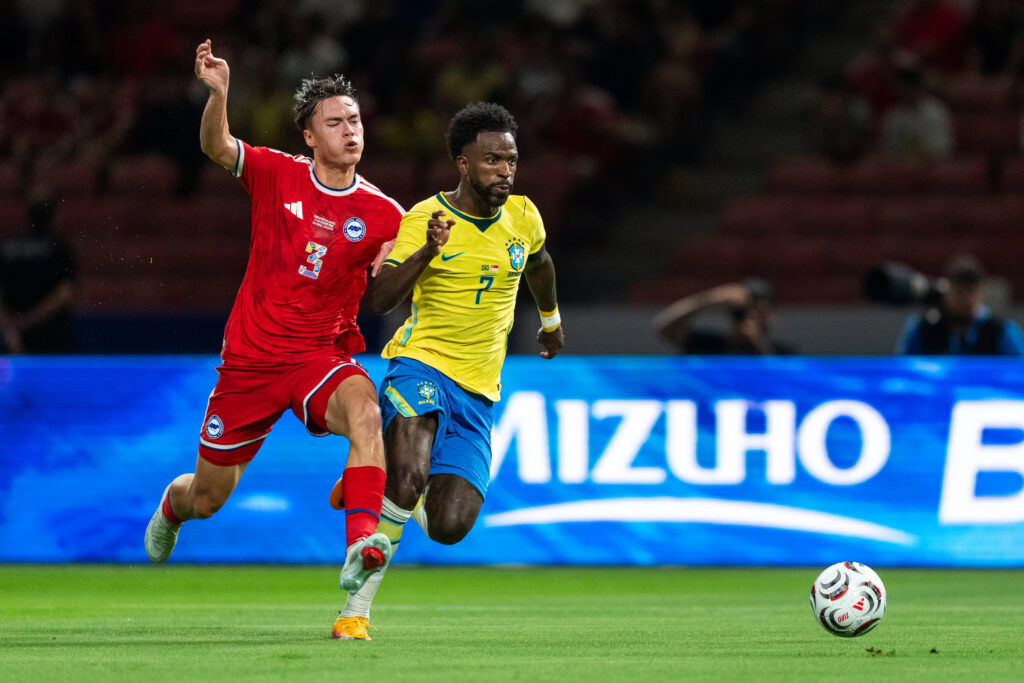
Lee acknowledged that the speed and intensity of the opposition had exposed weaknesses that his players rarely encounter at domestic or regional level.
“When you play a top, top team, they force you into making what might look from the outside like the simplest mistake. But that’s just their quality, because of the way they press you and the speed at which they press you,” he explained.
“Sometimes it looks like, ‘Oh, what an easy mistake,’ but it’s actually because they’re so good at defending.”
Lee added that while his players had shown glimpses of their ability to compete, sustaining that level against world-class opposition remained a major challenge.
“Because the challenge is not whether you can compete, but for how long you can compete. Brazil are a top, top team, so they really overload you and stretch you. The difference in quality was evident.”
Brazil acknowledge Singapore’s willingness to attack
Singapore’s approach also earned recognition from the opposing bench.
Mauri, who took charge on the touchline in place of suspended Brazil head coach Carlo Ancelotti, praised the Lions for attempting to play football rather than focusing solely on containing Brazil’s attack.
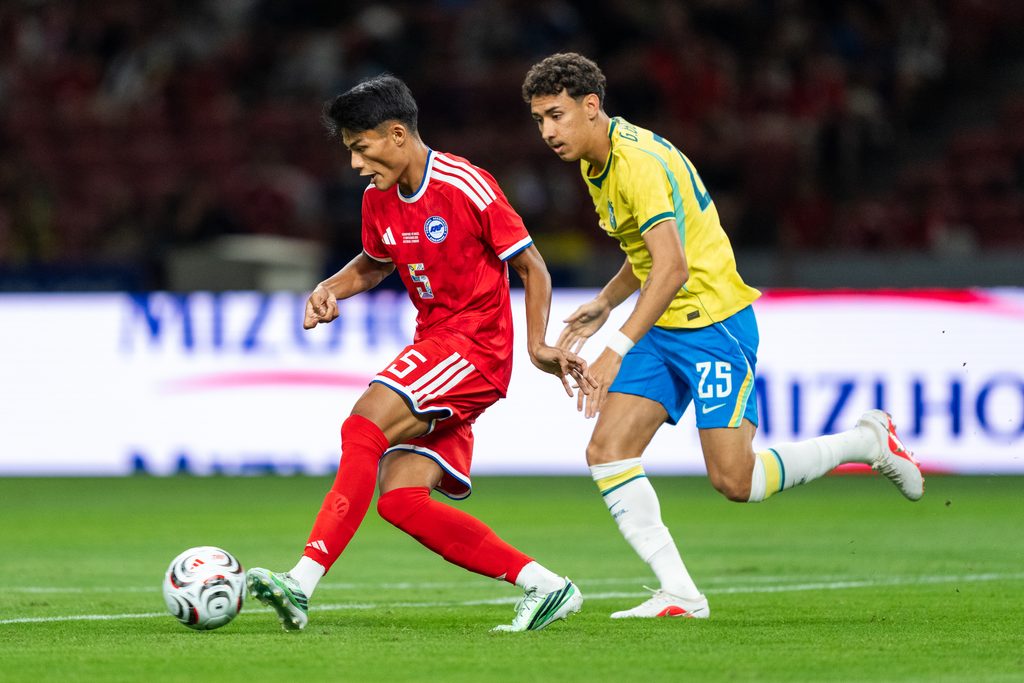
“I think it’s a team that tried to play, and that’s something we studied. So we tried to press hard, win the ball and attack in behind, and we did that well,” said Mauri.
“I always enjoy seeing a team that tries to do its best with the ball and doesn’t just try to defend.”
The Italian also admitted that Singapore’s tactical approach had occasionally caused problems for Brazil, particularly when one of their full-backs pushed higher up the pitch.
“At the start, we weren’t sure how to press, so sometimes they were able to play out of our high press,” he said.
Mauri stressed that Singapore’s development should not be judged solely on the result of one friendly, particularly against opponents of Brazil’s calibre.
Looking beyond the scoreline
For Lee, the two matches against Paraguay and Brazil were deliberately arranged to expose Singapore’s players to the demands of facing World Cup-level opposition ahead of the AFC Asian Cup. The continental tournament, originally scheduled to take place in Saudi Arabia from 7 January 2027, has since been postponed to December 2027, giving the Lions additional time to prepare for their return to Asia’s biggest international football competition.
He believes such experiences can help bridge the gap between Singapore and stronger international teams. However, he acknowledged that regularly facing vastly superior opponents might not necessarily be the most productive approach.
“If we were to keep playing opposition of this calibre all the way through our journey, that might not be the most helpful thing for our development,” he said.
“Ultimately, we want to apply ourselves against teams that are not too far away from us as well. But stronger teams still apply.”
The Lions conceded 11 goals across their two Mizuho Blue Challenge fixtures, highlighting the scale of the work ahead.
Yet Lee remains convinced that the experience can benefit not only the current squad, but also the next generation of Singapore footballers who watched their local heroes share the pitch with some of the world’s biggest stars.
“Sometimes we have to take the brunt of it, but hopefully the next generation can say, ‘I want to be in their shoes one day. I want to go and play Brazil as well.'”
Despite the difficult results, Lee urged supporters to keep backing the national team.
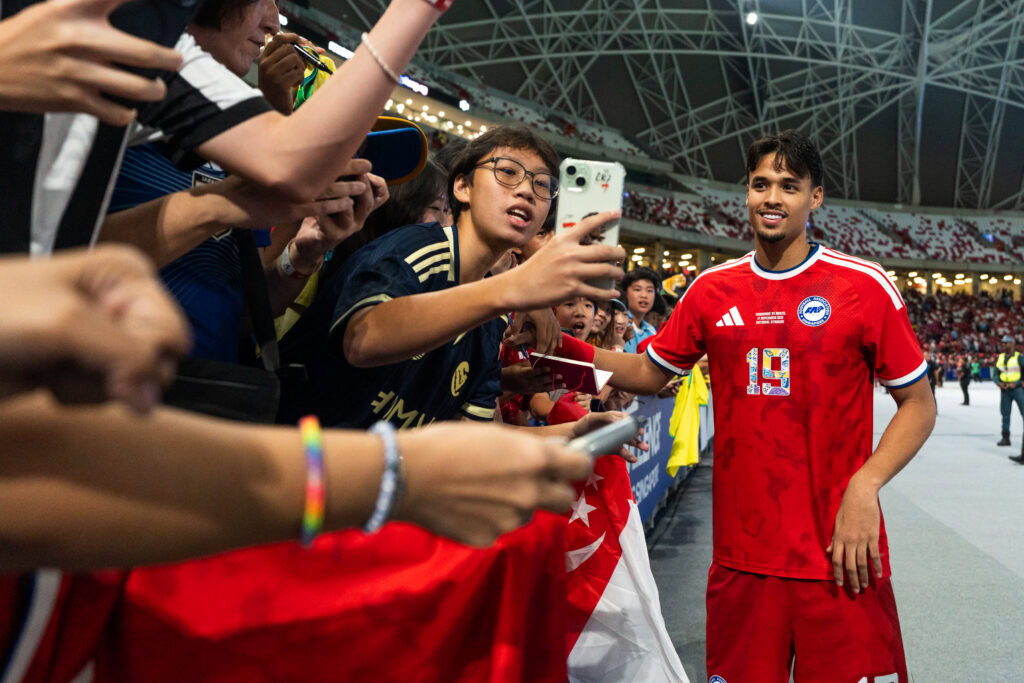
“Ultimately, every single game you get 11 guys on the pitch who are really desperate to represent the country. They’re so motivated to wear the badge, even though the challenges ahead are sometimes so tough,” he said.
“If we don’t support our own, then who will?”


