








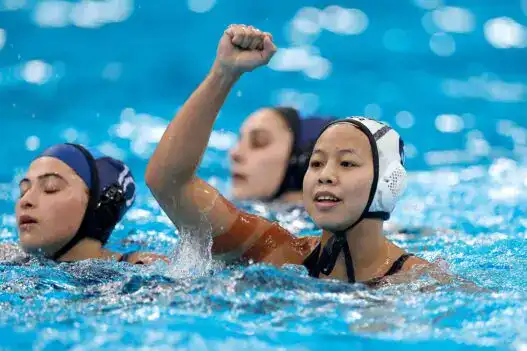
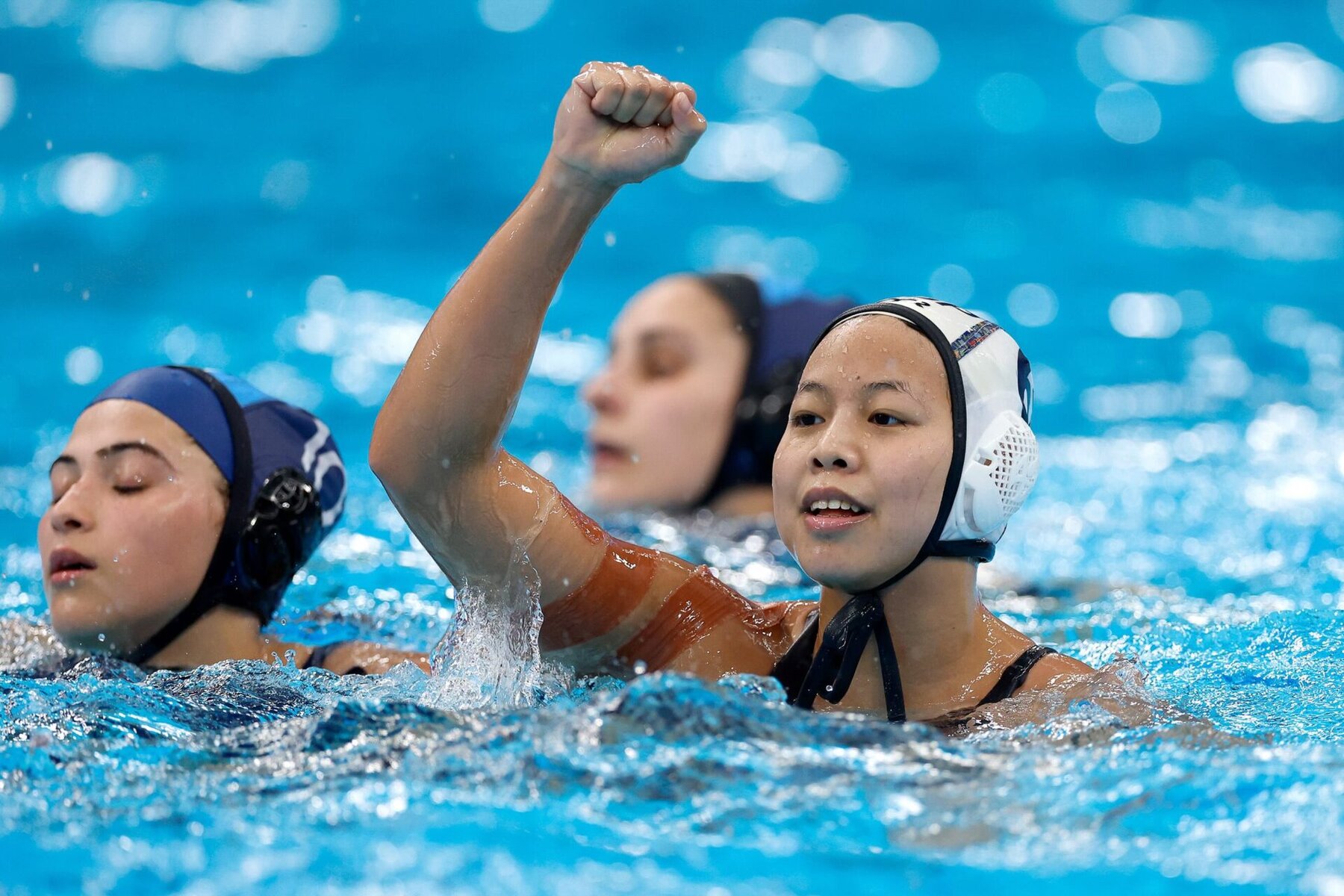
Standing between the national women’s water polo team and Southeast Asian (SEA) Games gold this December are the hosts, Thailand, national player Nicole Lim says.
“The goal for SEA Games has never changed for us,” the vice-captain said on the team’s quest for gold.
The battle for the regional crown has traditionally been between the two nations, with the world no.19 side playing bridesmaid to their Thai counterparts for four consecutive editions since 2015, excluding in 2021 when the sport was not contested.
Since their creditable fourth-placed finish at the 2023 Asian Games in Hangzhou, where they edged perennial rivals Thailand 7-6, and their debut at the Doha World Aquatic Championships last February, head coach Yu Lei has been scouring for overseas training opportunities to help his charges “unlock their potential” and finally step out of Thailand’s shadow.
Learning from China’s Champions
The former China international reconnected with his old youth squad teammate, Shi Yun Feng, who now chairs the water polo division of the Shanghai Swimming Association. So Lim, together with teammate Gan Huimin, was among the first to experience that initiative, joining Shanghai’s state club for a month-long stint.
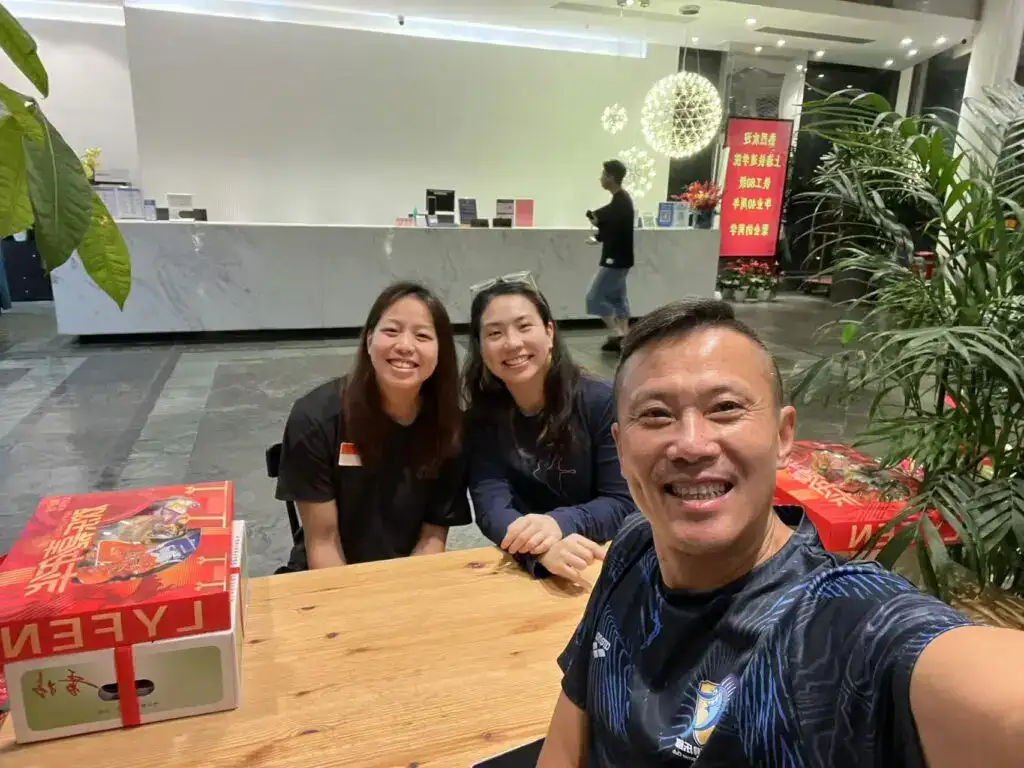
The pair then rejoined their teammates shortly after to compete in the week-long national championships, where they faced eventual winners Shanghai and six other state teams: Tianjin, Hunan, Guangxi, Guangzhou, Fujian, and Shandong.
Training in China, a nation that has long dominated the sport and currently ranks eighth in the world, proved to be an eye-opener for Lim.
Beyond learning strength and conditioning methods and the tactical approaches of their host club, who went on to clinch the national title that year, Lim also gained a rare glimpse into how the Chinese players trained, studied, and lived within a centralised training centre.
Transforming their game
“Training there taught me how much more we could do during sessions, as well as the importance of rest and recovery,” she said, adding that the experience highlighted the untapped potential that could be achieved with full-time training.
Lim is now among 17 players in the women’s team who are full-time athletes under the Enhanced Training Scheme, a pilot programme launched by national agency Sport Singapore and Singapore Aquatics.
“Going there also helped me to hone my attacking skills and gave me the confidence to improve my shooting and counter-attacks, which is something the Shanghai team is renowned for,” added the 24-year-old.
The pair also observed how the Shanghai team were able to draw pressure from opponents, patiently waiting for the right moment before making the pass, an aspect their own team had previously struggled with.
“We used to be afraid of holding the ball for too long and always wanted to give away the ball quickly. So bringing the Shanghai team’s philosophy back really helped us level up our gameplay and open up more opportunities for us to attack.”
Following positive feedback from the players on such overseas opportunities, Yu has also sent centre forward Celeste Wan and driver Heather Lee to Guangxi, while Ranice Yap trained with Hunan as well.
A scholarship from World Aquatics after the Doha championships also gave Lee the chance to train with Greek club ANC Glyfada for seven months.
With their wealth of unique experiences, the players returned to share firsthand lessons and practical tips gleaned from their stints abroad.
“Every player learns different things from their experiences, and they summarise their learnings to share with the rest of the team. We also analyse the training plans of these overseas clubs,” Yu said.
Returning to the world stage
With the World Aquatics Championships in Singapore this July, Lim pointed to marked progress at the premier competition a year after their debut.
“We improved a lot, and the way that we trained leading up to it really helped us face stronger opposition without fear. Training with that mindset will be important in the upcoming SEA Games,” she said. “We were also a lot more prepared and had more strategies in place, trying to move a lot more while being unafraid to take shots when given the chance. On defence, we were also clearer on what we had to do. So for us, that was a win.”
The world championships also proved to be a test of resilience for the right winger, having suffered a shoulder injury on her dominant arm just two weeks before the competition.
“I was not able to pass or shoot until just before our first day of competition, and I had to take painkillers and wrap my shoulder up just to play.”
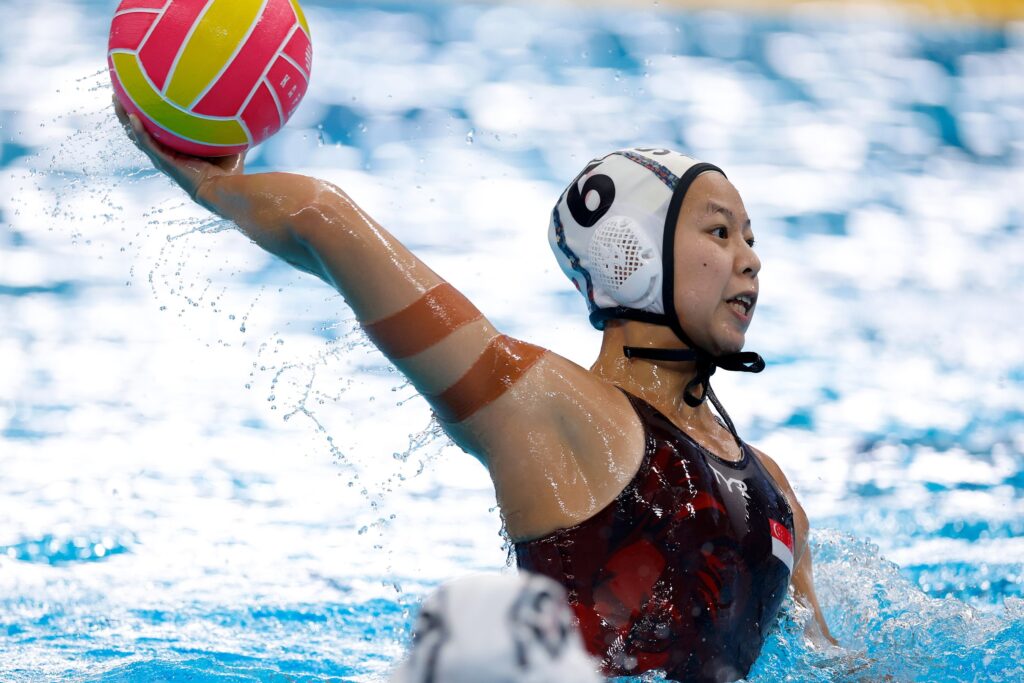
But Lim demonstrated remarkable grit to compete in the pool and even got on the scoresheet in their final match against Argentina.
Yu also lauded his side’s tenacity in the face of superior opposition at the championships.
“The way they competed with their opponents was admirable, so I think these overseas opportunities have reaped rewards,” the 54-year-old said. “The team’s physicality, defence, shooting, teamwork and spirit were much better than the last edition. And although we finished in the same position, we improved a lot in terms of performance.”
Building towards gold
But for now, it’s full steam ahead to the regional games.
“After the world championships, the next biggest competition for us is the SEA Games. It’s a competition we’ve been preparing for all year, and the experience from the world championships will definitely be helpful.
“Thailand is the host, so the pressure is expected, but the team is all on the same page and we will give our all to get gold.”


